Low water, high water, clear water, and muddy water. One thing they all have in common is that they all have trout in them that eat bugs. GO FISHING
Spring runoff is NOT a reason to take time off from fishing. Fish gotta eat. You just need to work a little harder for it. The rewards are plentiful, and one of the benefits to being a dedicated fisherman or woman at this time of year is that some of the biggest trout are caught prospecting the runs, seams, and riffles.
It’s definitely an interesting year, and we’re wondering whether we’ll experience a “true” runoff. River flows above 2,000 cfs on the Eagle River didn’t seem likely this year, but what a difference a week makes.
EAGLE RIVER
Flows have been hovering just below 1,000, with today’s flows at 1780 @ STP (Sewage Treatment Plant) and 2300 below Wolcott, allowing for safe passage while still quite technical. If you’ve got the skills, floats from the STP all the way down to Duck Ponds west of Gypsum are producing terrific fishing. While the river can be pushy and there are periods of boulder dodging between float fishing, there are many fishing opportunities.
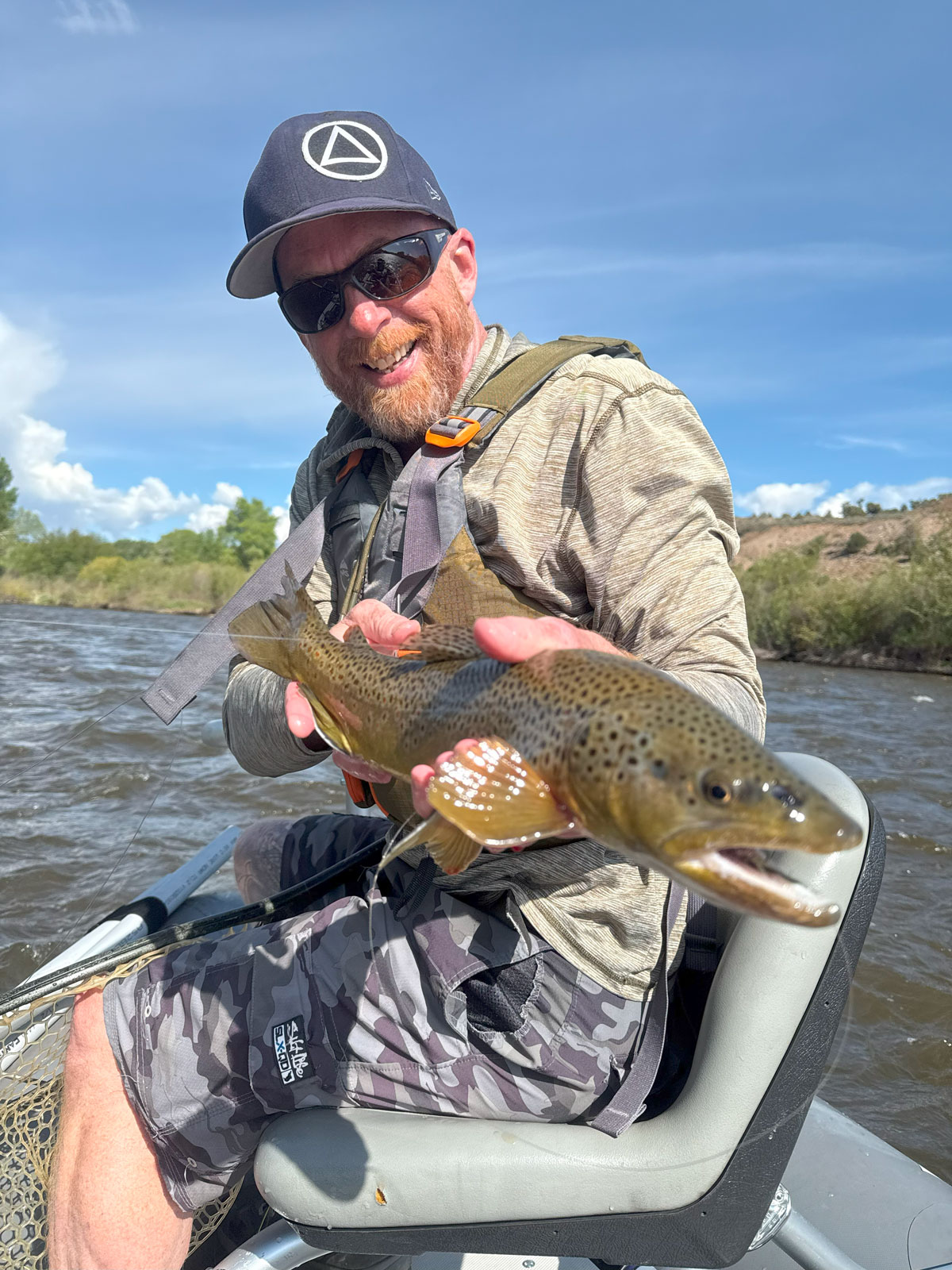
FLOAT FISHING
On The Run
Fish streamers are tight to the banks and also in the “soft pockets” in the armpits at the head, middle, and tail of water that parallels fast current. Here is where I suggest you forget what you think you know about streamer fishing. Typically, you cast as tight to the bank as possible, stripping slow to fast off the bank for about 6 feet from it. Try as you must to stop stripping continually! The water is not as clear, and the fish cannot track the fly with your continual stripping, so give them a chance to turn and grab it. Spring streamer fishing involves a lot of dead drifting your flies. Articulated flies work best, Crystal Bugger Pearl, Motor Oil, Sex Dungeon, and other large, articulated offerings. Realize that your articulated fly is working for you as it floats through the water. Flipping back and forth and doing its job. Yes, you need to pick up the slack and keep from snagging the bottom, but trust me, it works. I fish a 20-25# leader with only 3 feet of tippet. This allows you to do some landscaping as you pull up branches and twigs, since you rarely have to break them off. But you do bend out hooks and roll the hook tip, so keep a sharpener and hemos handy to reshape your flies.
Also, should you dare, run a second fly off the back of the streamer. Start with a Pats stone (Coffee & black is my favorite), but switch it up to a San Juan, Squirmy, or some of the other small offerings already mentioned. Guide’s choice, Frenchie or other caddis imitation. The second fly gets picked up a lot while nymphing the streamer.
Riffle Runs
Whenever possible, eddy out along the sides of the rifle runs. Be sure to know if you are on public or private, and don’t drop your anchor where it’s not legal. Let the rower hold you along the side of the riffle run and nymph the bejeezus out of the run. Super productive. Run pats stones, squirmy wormies, and a myriad of caddis and mayfly nymphs through these runs. You will catch fish. REMEMBER, don’t be afraid to go small. In A LOT of the riffle runs we fished the past couple of weeks, the most and biggest fish were taking the smallest offerings. Size 14-16 caddis imitations and even midges! Try to throw something with a “hot collar”. Orange or pink works well in off-colored water. Guide’s choice: Frenchies, soft-hackle hare’s ear with an orange collar. 99% of your flies should have a bead head. If you need weight, add it. If you don’t, don’t. I typically keep a Pats stone on as my lead fly, which gets my rig down. If needed, I’ll add some shot above it to get my 1 or 2 following flies down and tick, tick, ticking the bottom, ensuring I’m getting in the fish’s face.
WADING
Find The Fish
There are fewer banks, so watch your step as you work the shoreline. Search out your accessible water and locate the soft pockets, riffles, and holes that give the trout a reprieve from the fast-flowing water. A quote often used in saltwater environments applies to fishing runoff. “Don’t leave fish to find fish.” Once you’ve hooked a fish in a certain location, know there are others, for you have located an area where they have a reprieve from the high-flowing water. Ply the water where you got him fishing with confidence that there are likely many others holding in the same location.
This is a time of year to cash in on your knowledge of the stream at lower levels. If you can remember where the small or large shelves dropped off into deeper runs, fish there. That is a prime spot to run your flies off that ledge and into their faces. I’ve been educated a few times by friends with intimate knowledge of where these runs existed, and we now returned to these locations to fish shelves I was unaware of. If you know, you know.
Don’t Be Afraid to Go Small
Fishing from the bank leads to (typically, no place is safe) fewer tangles, so throw 3 flies. Pats, San Juan worm 2 tone with bead in the middle, caddis nymph. Locate the fish and adjust your offering to match what they can see and eat.
Other Notes
If you’re fishing from a boat and one person is streamer fishing and the other nymphing, have the streamer fisherman in the back of the boat. If you’re wading with 2 rods (Highly recommended), fish your nymphs through the area you are working and then run the streamer through it before you move on.